
African Heritage × Cultural Identity × Textile History

Did you know the Basotho blanket - one of Africa's most iconic garments - began as a diplomatic gift from the British Empire, and became a symbol of the nation it was meant to control?
"Queen Victoria spoke of 'spreading her blanket' of protection over Lesotho. The Basotho took that blanket, and made it entirely their own."
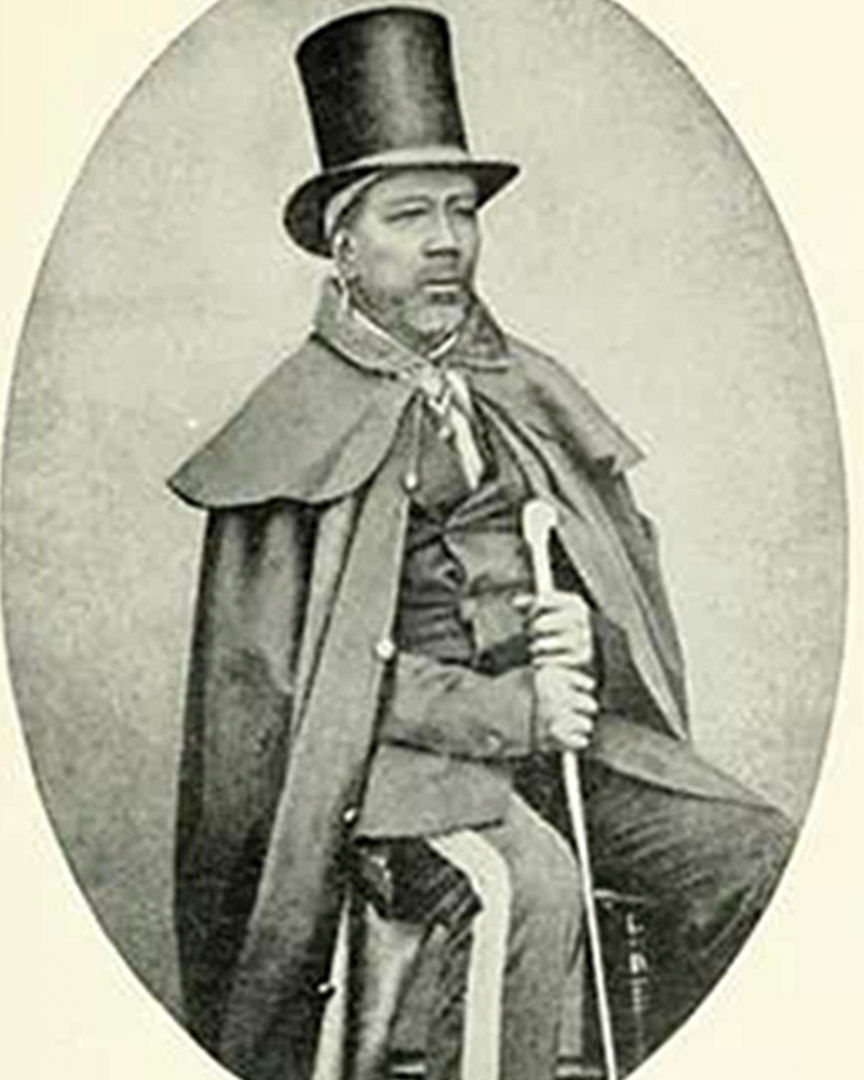
Moshoeshoe I, founder and king of the Basotho nation — present-day Lesotho — was one of 19th-century Africa's most remarkable leaders. A military strategist and diplomat of extraordinary skill, he held his kingdom together against wave after wave of external threat. In 1867, pressed on multiple fronts, he appealed to Queen Victoria for protection. She agreed, and described her decision in terms that would become unexpectedly literal: she spoke of spreading her blanket over the country.
1.Basotho Blanket detailed 2. Basotho patterns 3.Tobago Linkoane, Mantso Nyane Nyelinane, Lekhoooa Linkaone - Semonkong Lesotho - @thom.pierce
The blanket that followed, said to have been presented as a gift from the British Empire, was a woollen European trade blanket. Practical. Functional. Intended as a utility. What happened next is what makes this story extraordinary.
The Basotho did not simply wear the blanket. They transformed it into one of the most visually and symbolically rich textile traditions in the world. Each design carries a specific meaning, royal lineage, rite of passage, marital status, and military honour. The blanket became a wearable language, draped as a poncho across the highland landscapes of the Drakensberg mountains, as distinctive and meaningful as any designed garment in the history of fashion.
Today, there are dozens of named patterns, from the geometric precision of the Seanamarena to the bold graphic energy of contemporary designs. Worn by herdsmen on horseback, by children on doorsteps, by elders at ceremonies, the blanket crosses every boundary of age, occasion, and rank. It is identity, worn as cloth.

Photographer Thom Pierce has documented this world with extraordinary sensitivity in his Horsemen of Semonkongseries — portraits of Basotho horsemen wrapped in their blankets against the vast mountain landscape of Lesotho. The images are among the most powerful pieces of documentary fashion photography of the past decade. They capture exactly what I find so endlessly compelling about this story: the dignity of a culture that took what was imposed on it and made something more beautiful, more layered, and more meaningful than anything the givers had imagined.
1.The horsemen of Semonkong - Motaba Motaba - Thom Pierce 2.The horsemen of Semonkong - Thapelo Moiloa - Thom Pierce (1978) is an award-winning British portrait photographer. His work explores the line between art, documentary, and traditional portrait photography to create carefully crafted, dramatic images.
This is the kind of story the AfriScandiStyle research practice is built on, the places where cultures collide, adapt, and create something entirely new.
Comments