
Danish design made in Uganda
Creative
Consulting

G-Star Raw | Ecco Leather | Levi Strauss & Co | Vlisco | Marriott | Soho House | 3daysofdesign | Wales Bonner | Maison & Objet | Stone Island | Rick Owens | Givenchy | Botter Paris | Peter Do | Tommy Hilfiger | Pepe Jeans |
Creative direction, brand strategy, and cultural storytelling | for fashion brands, hospitality partners, and media. Based in Amsterdam. Available globally.

MEET CHRISTINE MUKAKASA
Where culture, craft,
and commerce meet.
Christine Mukakasa is a creative director and brand strategist with 20+ years across fashion, denim, and luxury materials. Born of Ugandan and Danish heritage, raised between Kenya and Copenhagen, she built her practice at the intersection of two design philosophies,and turned that duality into a creative method.
"Design is cultural authorship. Every collection, every campaign, every object tells a story about where we come from and what we value."
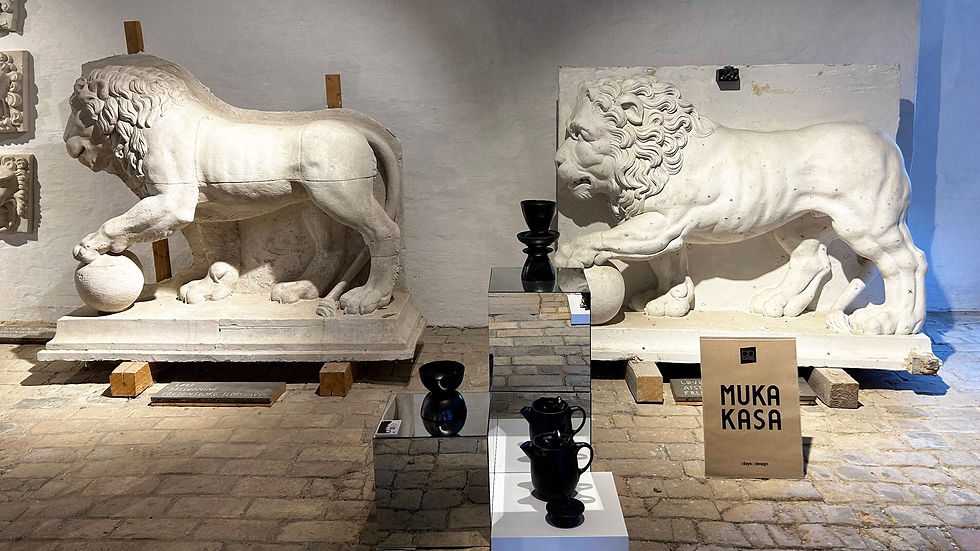
As Head of Design at G-Star RAW she led 40+ creatives, directed New York Fashion Week and delivered up to €20M PR value per season. At ECCO Leather she repositioned a global tannery as a designer-led creative partner, attracting Rick Owens, Givenchy, Stone Island, and Wales Bonner. As Co-Founder of MUKAKASA she took a brand from first concept to Maison & Objet debut.
She works on a consulting and fractional basis with brands ready to build something that lasts.
SERVICES
What I offer
Six modes of engagement, from single-season creative direction to long-term fractional leadership. I work with fashion brands, lifestyle brands, hospitality partners, and media organisations who want creative thinking that is both culturally rooted and commercially sharp.


01
Fashion Consultancy & Trend Research
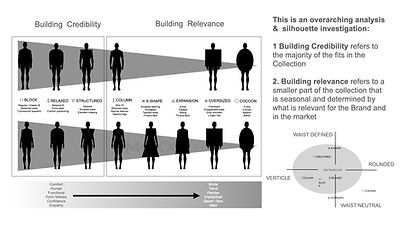
Culturally grounded trend direction. I research with depth, connect macro signals to your specific product world, and translate findings into seasonal concept books your team can build from.
TREND FORECASTING | COLOUR DIRECTION | FABRIC & MATERIAL | CONCEPT BOOKS
02
Product Development & Concept
From first sketch to final techpack. I bridge creative vision and commercial reality, designing products that are beautiful, buildable, and on-brief across denim, leather, and lifestyle categories.
CONCEPT DEVELOPMENT | FIT & SILHOUETTE | LINEPLAN | TECHPACK
03
Art Direction & Visual Storytelling
Campaign, shoot, and editorial art direction informed by archival research and cultural narrative. A precise eye for casting, styling, and composition across fashion, hospitality, and interiors.
CAMPAIGN DIRECTION | STYLING | TRADE FAIR | DIGITAL & SOCIAL


04
Brand Positioning & Storytelling
Helping brands find and own their cultural territory. From identity and messaging to cross-channel narrative frameworks built to last across collections, seasons, and markets.
BRAND DNA | POSITIONING | CROSS-CULTURAL STORY| SUSTAINABILITY
05
Operations & Team Guidance
Creative excellence needs operational clarity. I restructure design calendars, define team roles, and cut development time, so ideas move faster and land better. Proven from 70-person restructures at scale.
CALENDAR MANAGEMENT | TEAM STRUCTURE| SKU RATIONALISATION | PROCESS DESIGN
06
360° Creative Leadership
For brands at a pivotal moment. Fractional creative director connecting product, storytelling, operations, and partnerships into one coherent vision, from brief to market, season to season.
FRACTIONAL CD | BRAND BUILD | BOARD STRATEGY | INTERIM LEADERSHIP



WHO THIS IS FOR
Three audiences,
one creative partner.
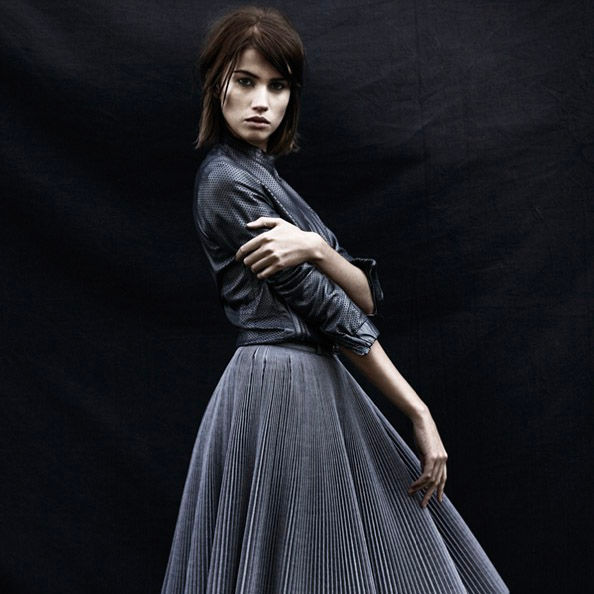
Whether you are scaling a fashion or lifestyle brand, designing a hospitality experience, or creating editorial content that inspires, Christine brings the same thing: creative leadership rooted in deep material knowledge and genuine cultural curiosity.
CURIOSITY AS PRACTICE
Did you know?
The #AfriScandiStyle philosophy is not just an aesthetic, it is a research practice. Great creative work begins with genuine curiosity about history, material culture, and the stories behind things. This ongoing series is one expression of that, and it feeds everything I design.
Casual Decadence; Why I Keep Returning to the 1920s & 30s
"When jersey entered the wardrobe in the 1920s and 30s, it did more than introduce a new fabric, it introduced a new attitude."
Silhouettes became fluid. Dressing became more instinctive. Movement, comfort, and confidence started to shape style in a completely new way.
But what I love most about this era is its fearless contrast. Casual knits worn with glamorous furs. Simple daywear elevated with veils. Effortless dressing paired with pure theatre, sometimes even a pet leopard on a leash. It feels almost surreal today.
Perhaps that is why I keep returning to these moments, studying them, reinterpreting them, and recently even bringing archival 1920-30s imagery to life through AI as a small creative experiment in translating historical atmosphere into the present.
For me, true style lives in that tension. Dressing up a pair of jeans. Dressing down a (today, faux) fur. Allowing ease and decadence to exist in the same look and in the same woman. Because style should feel magical, personal and a little bit unexpected.

UGANDAN HERITAGE × MATERIAL INNOVATION
Uganda's Ancient Cloth -Older Than Weaving Itself
"A cloth made from a tree. No dye. No loom. No thread. Just bark, a mallet, and two thousand years of knowing exactly what to do."
Barkcloth making in Uganda is listed on UNESCO's Representative List of the Intangible Cultural Heritage of Humanity. Not as a historical record, but as a living practice, actively maintained in Uganda, and passed down through generations without interruption.
The craft belongs to the Ngonge clan, led by the kaboggoza, the hereditary chief craftsman, responsible for producing barkcloth for the Baganda royal family for as long as records exist. This is not artisanal production in the contemporary sense. It is a lineage with responsibility to carry on.
During the rainy season, the inner bark of the Mutuba tree, Ficus natalensis, is carefully harvested and beaten with wooden mallets of varying sizes. Each stage softens the fibres further, flattening and thinning the material until it reaches a texture closer to suede than anything you would expect from a tree. The colour that emerges, warm, consistent terracotta, comes entirely from the bark itself. No dye. No addition. Just time, skill, and the right tree.
This is a CO₂-neutral, entirely natural material that the contemporary design world has barely begun to take seriously. For the MUKAKASA world, where material depth and cultural honesty are the brief, it is one of the most important stories we can tell.
SCANDINAVIAN DESIGN × CRAFT HERITAGE
Denmark's Most Influential Designer, Hidden in Plain Sight for Decades
"He learned his craft not in a classroom, but in the workshops of Copenhagen craftsmen, touching clay, wood, silver, leather and steel before he was old enough to study design formally."
Jens Harald Quistgaard (1919–2008) began at fifteen, when a series of knives he had made was exhibited at Charlottenborg, Copenhagen's most prestigious exhibition space. Not a student show. The real thing. What followed was a career spanning more than 4,000 products and a material intelligence that no design school can teach.
Quistgaard grew up wandering the workshops of local Copenhagen craftsmen, developing an instinctive understanding of clay, wood, paper, silver, leather, and steel through direct contact and hands in materials, not theory. That curiosity became the foundation of everything he made.
This is the kind of creative thinking that lives in the MUKAKASA world, where material knowledge, cultural curiosity, and the desire to make something genuinely beautiful are the only brief that matters.


01
Designed by a Dutchman. Inspired by an Ethiopian empress. Claimed by the Black Panthers.
One piece of cloth, three continents, two centuries, and a political revolution. This is what design does when it travels.
02
A face mask worn to harvest fields. Sewn from silk sailed home from Thailand and India. Hidden behind it: a woman you cannot read, dressed in one of the most extraordinary costumes in Scandinavian history.
The national dress of Fanø has fascinated me for years. Pattern mixing. Material richness. The quiet power of a face that refuses to be seen.
03
Queen Victoria promised to spread her blanket of protection over Lesotho. The Basotho took that blanket, and turned it into one of the most visually powerful textile traditions in the world.
A gift from an empire. Claimed, transformed, and made entirely their own.


04
The dye is not applied. It is beaten in, hammered into the cloth with wooden mallets until it stains the skin of the wearer blue. This is how an entire people became known as the blue men of the Sahara.
And in their matrilineal society, it is the men who veil their faces. The women, draped in deep indigo, silver jewellery, and face art, are the centre of gravity of their world.
05
He told fairytales with scissors in his hand, cutting folded paper as he spoke, unfolding a complete image at the final word. He called himself "the man who wrote with scissors." He hid self-portraits inside the cuts.
Most people know the stories. Almost nobody knows the art.
06
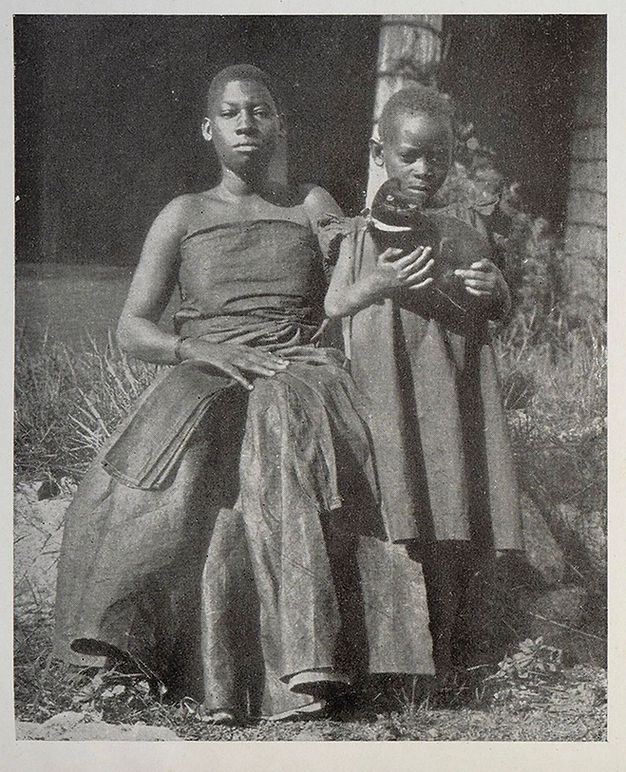
She is one of Denmark's most recognisable logos, on coffee tins since 1955. Most people have seen her thousands of times. Almost nobody knows her silhouette carries the echo of the Mangbetu women of the Congo.
African visual culture has shaped European design for longer than we acknowledge. This is one proof of that.

LET'S WORK TOGETHER
Ready to build
something that
matters?
I take on a limited number of projects each year. Every enquiry is reviewed personally. Whether you are a fashion brand, a hospitality partner, or a media platform - I would love to hear from you.
BASED IN
ENGAGEMENTS.
PORTFOLIO
STAY IN THE MUKAKASA WORLD
New Did You Know stories, collection launches, and updates from the studio, direct to your inbox.